Is Luxury Vinyl Plank Better Than Hardwood?
Phoenix homeowners face flooring challenges that most other parts of the country simply do not. Intense summer heat, very dry air, and the occasional monsoon humidity swing put real stress on flooring materials. Both luxury vinyl plank and hardwood offer a similar wood-look aesthetic, but they perform very differently in a Valley home, and many homeowners are unsure which one actually fits their budget, lifestyle, and long-term goals.
The honest answer is that luxury vinyl plank can be a genuinely smart choice for many Phoenix homeowners, particularly those with pets, kids, or rooms that see moisture. But the right decision depends on more than just price. Your household activity level, the rooms you are flooring, how long you plan to stay in the home, and your resale priorities all matter. Hardwood remains a compelling option in the right circumstances.
This guide breaks down both flooring types side by side so you can make a confident, informed decision for your home.
Table of Contents
- What Luxury Vinyl Plank and Hardwood Flooring Actually Are
- Durability and How Each Holds Up in an Arizona Home
- Moisture, Heat, and Humidity Performance in Phoenix's Climate
- Cost Differences: Material and Installation
- Maintenance, Cleaning, and Long-Term Upkeep
- Is Luxury Vinyl Plank Better Than Hardwood (and When)
- Resale Value and Buyer Perception of Each Flooring Type
- LVP vs. Hardwood: Side-by-Side Comparison
- Which Rooms in a Phoenix Home Are Best for LVP vs. Hardwood
- Frequently Asked Questions
- Conclusion
What Luxury Vinyl Plank and Hardwood Flooring Actually Are
Before comparing the two, it helps to understand exactly what each product is and how it is made. The differences in construction explain most of the performance differences you will encounter as a homeowner.
What Is Luxury Vinyl Plank (LVP)?
Luxury vinyl plank is a multi-layer synthetic flooring product engineered to look and feel like real wood. A typical LVP plank consists of four layers: a backing layer for stability, a rigid or semi-rigid core (often stone-plastic composite or wood-plastic composite), a high-resolution photographic print layer that replicates wood grain, and a protective wear layer on top. That wear layer is measured in mils and is one of the most important factors in determining how durable a particular LVP product is. Thicker wear layers (12 mil and above) resist scratches, scuffs, and heavy foot traffic far better than entry-level options.
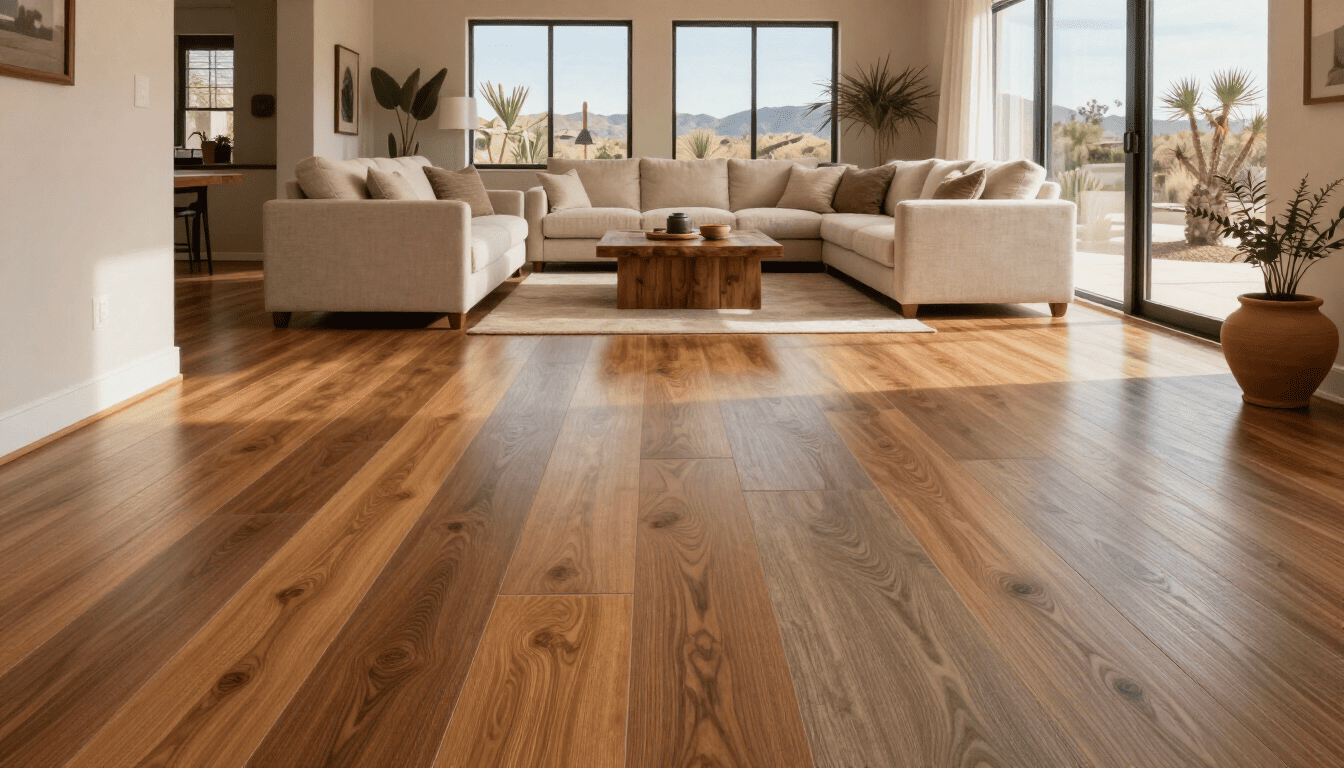
Modern LVP from today's leading mills has become remarkably realistic in appearance. Embossed textures, varied plank lengths, and authentic grain patterns make it difficult to distinguish from real wood at a glance. For Phoenix homeowners who want a wood-look floor without the drawbacks of real wood in a hot and dry climate, LVP has become a popular and practical solution.
What Is Hardwood Flooring?
Hardwood flooring is milled from real trees and comes in two main forms: solid hardwood and engineered hardwood. Solid hardwood is exactly what it sounds like, a single plank of wood milled to a uniform thickness, typically three-quarters of an inch. Engineered hardwood has a real wood veneer on top bonded to multiple layers of plywood or high-density fiberboard underneath, which gives it greater dimensional stability compared to solid hardwood.
Both types of hardwood provide genuine wood character that no synthetic product can fully replicate. The natural variation in grain, color, and texture from plank to plank gives hardwood floors a depth and warmth that many homeowners find irreplaceable. In higher-end homes and in certain resale markets, hardwood flooring carries a premium perception that synthetic alternatives have not fully matched.
Durability and How Each Holds Up in an Arizona Home
Durability is one of the most common reasons Phoenix homeowners consider luxury vinyl plank over hardwood. In the right conditions, both products are durable. In the wrong conditions, one clearly outperforms the other.
Scratch and Dent Resistance
LVP with a commercial-grade wear layer (20 mil or higher) is among the most scratch-resistant flooring options available for residential use. The wear layer takes the impact of pet nails, furniture legs, and high foot traffic without marking. Mid-grade residential LVP in the 12 to 20 mil range still offers noticeably better scratch resistance than most hardwood species.
Hardwood scratch resistance varies by species. Harder species like hickory, white oak, and Brazilian cherry resist surface scratching better than softer species like pine or maple. However, no hardwood species fully matches a thick-wear-layer LVP product for scratch resistance in a home with active pets or children. Hardwood can also dent under heavy furniture or dropped objects in a way that LVP typically does not.
Long-Term Durability
One area where hardwood has a significant advantage is long-term durability through refinishing. A solid hardwood floor can be sanded and refinished multiple times over its lifetime, essentially renewing its surface every 10 to 15 years. This means a well-maintained hardwood floor can last 50 years or more. LVP cannot be refinished. Once the wear layer is worn through, the floor needs to be replaced. Premium LVP products typically carry 15 to 25 year warranties, and a well-installed floor can last that long or longer, but it does not offer the renewal option that hardwood provides.
Moisture, Heat, and Humidity Performance in Phoenix's Climate
Phoenix's climate is one of the most important factors in this comparison. The combination of extreme summer heat, very low average humidity, and periodic monsoon moisture swings creates conditions that affect hardwood flooring in ways that do not apply in more temperate climates.
How Heat and Low Humidity Affect Hardwood in Arizona
Wood is a natural material that expands and contracts with changes in humidity and temperature. In Phoenix, where indoor relative humidity can drop to 10 to 20 percent during dry months, solid hardwood flooring is prone to gapping. Planks shrink as they lose moisture, creating visible gaps between boards. During summer monsoon season, humidity spikes can cause the opposite problem, with planks swelling and cupping. Managing this requires careful acclimation before installation, maintaining consistent indoor humidity with humidifiers, and in some cases, choosing species and cuts that are less prone to movement.
Engineered hardwood performs better than solid hardwood in Phoenix because its layered construction resists dimensional movement more effectively. Many flooring professionals in the Valley recommend engineered over solid hardwood for this reason. That said, engineered hardwood is still a wood product and still requires humidity management to perform at its best.
How LVP Handles Phoenix's Climate
LVP is dimensionally stable and does not absorb moisture. It does not gap, cup, or warp in response to humidity changes. In Phoenix's extreme heat, however, some LVP products can be susceptible to thermal expansion if they are installed in spaces with high direct sunlight and no climate control. Quality stone-plastic composite (SPC) core LVP is more dimensionally stable in high-heat environments than older wood-plastic composite (WPC) formulations. For Phoenix homeowners, specifying SPC core LVP and ensuring the home maintains a consistent temperature range is important for long-term performance.
Moisture Resistance by Room
LVP is 100 percent waterproof at the plank level, making it the clear choice for kitchens, laundry rooms, bathrooms, and any room with regular moisture exposure. Hardwood should not be installed in bathrooms or laundry rooms, and requires careful protection in kitchens. LVP's waterproof advantage is one of the primary reasons it has become the preferred flooring choice in high-moisture areas of Phoenix homes.
Cost Differences: Material and Installation
Cost is a major factor in this decision, and the gap between LVP and hardwood is meaningful for most homeowners.
Material Costs
Entry-level LVP starts around $2 to $3 per square foot for basic products. Mid-grade residential LVP, which is the appropriate choice for most Phoenix homes, typically runs $3 to $5 per square foot. Premium LVP from leading mills, the kind found at a specialty retailer like Eagle Flooring West, ranges from $5 to $8 per square foot, with some designer collections going higher. These products offer better aesthetics, thicker wear layers, and more realistic wood visuals.
Solid hardwood flooring typically starts around $5 to $7 per square foot for domestic species and goes up to $12 or more per square foot for premium or exotic species. Engineered hardwood is somewhat more affordable, typically $4 to $10 per square foot depending on the veneer species, layer construction, and brand. Material costs for hardwood in Phoenix may be higher than in other markets due to the added difficulty of acclimating and managing the product in a dry climate.
Installation Costs
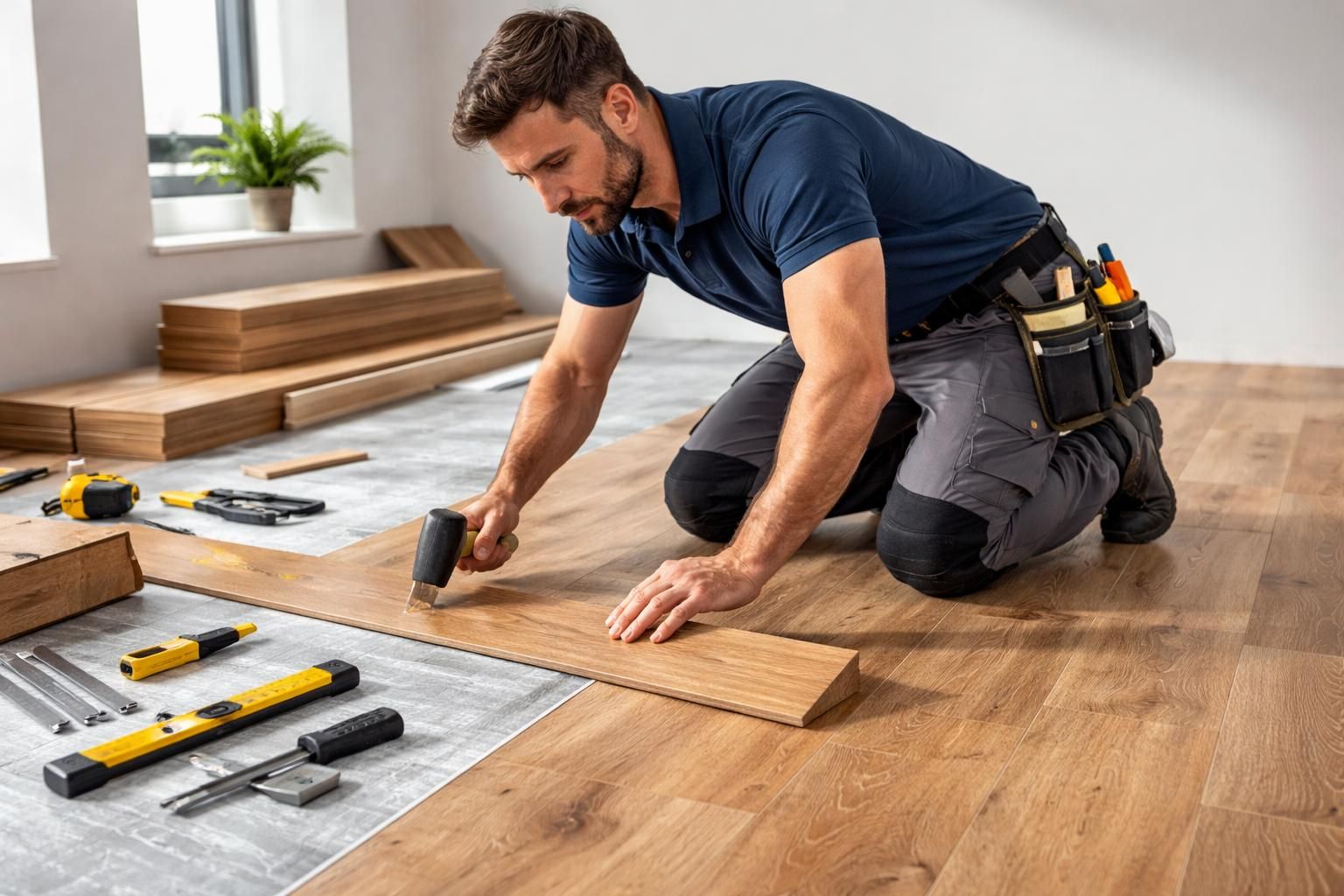
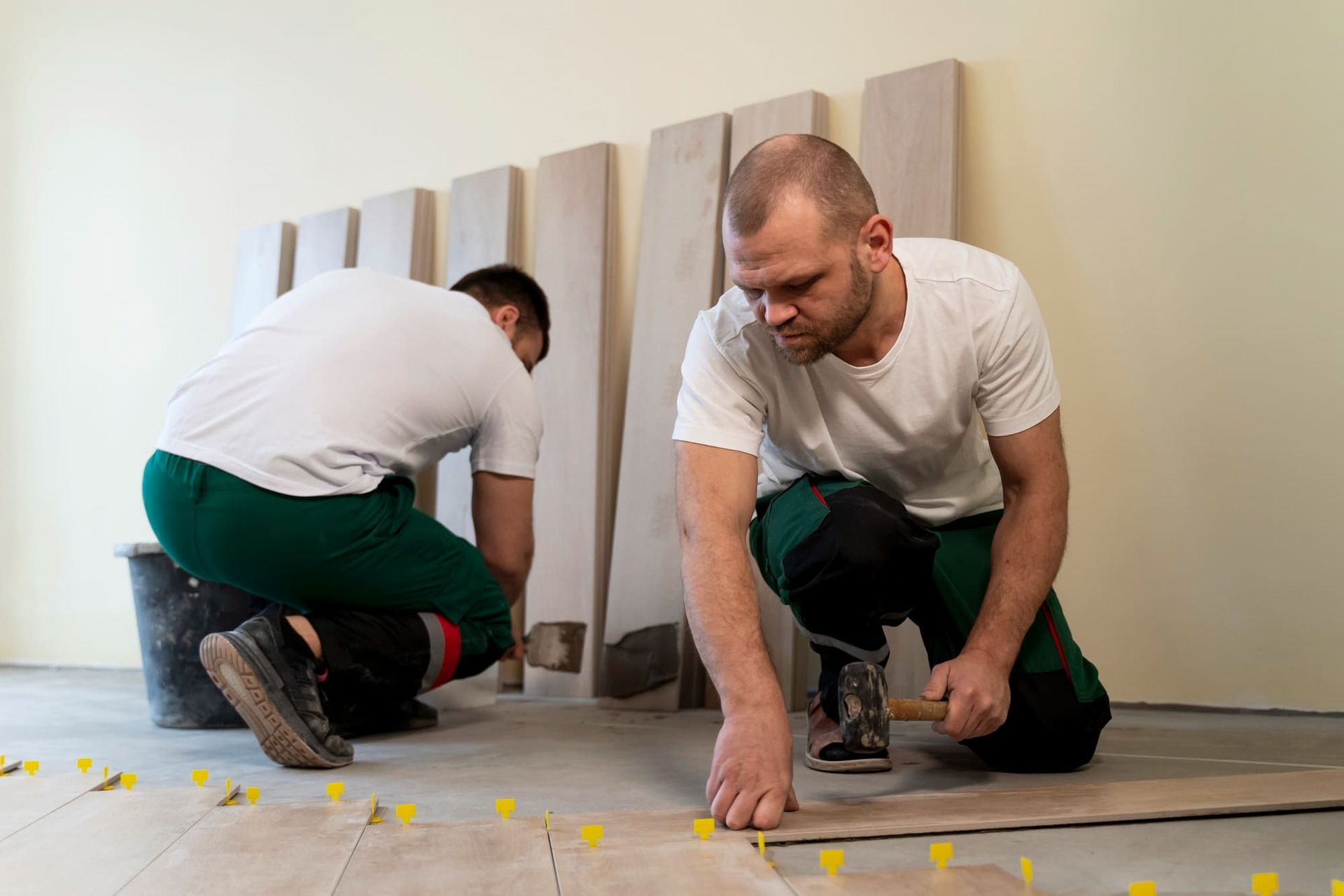
LVP installation is generally faster and less labor-intensive than hardwood. Many LVP products use a floating click-lock installation that does not require glue, nails, or extensive subfloor preparation. Professional LVP installation in the Phoenix area typically runs $2 to $4 per square foot, bringing the installed cost for a quality product to approximately $7 to $12 per square foot all-in.
Hardwood installation is more involved. Solid hardwood requires nail-down or glue-down installation over a properly prepared subfloor. Acclimation time adds several days to the project timeline. Professional installation in the Phoenix market typically runs $4 to $6 per square foot for hardwood, and the total installed cost for a quality product commonly falls in the $10 to $18 per square foot range or higher for premium species.
Maintenance, Cleaning, and Long-Term Upkeep
Day-to-day maintenance is an area where LVP has a meaningful practical advantage for most Phoenix households.
Cleaning LVP
LVP is easy to maintain. Regular sweeping or vacuuming removes dust and debris, and damp mopping with a pH-neutral cleaner is safe for routine cleaning. The waterproof surface means spills can be wiped up without concern for staining or moisture damage. LVP does not require special sealers, periodic refinishing, or humidity-controlled care. For busy households, this low-maintenance profile is a genuine quality-of-life benefit.
Cleaning and Maintaining Hardwood
Hardwood requires more careful attention. It should be swept or vacuumed regularly to prevent grit from scratching the surface. Damp mopping is acceptable but must be done with a barely damp mop and a hardwood-specific cleaner. Excessive water on hardwood surfaces is a real concern, particularly in kitchen areas. Over time, hardwood may need periodic spot refinishing for scratches and a full sand-and-refinish every 10 to 15 years depending on traffic and wear. In Phoenix, managing indoor humidity to prevent gapping and cupping is an ongoing responsibility that LVP simply does not require.
Is Luxury Vinyl Plank Better Than Hardwood (and When)
The answer to the title question is: it depends on your priorities. Here is a clear breakdown of when each flooring type is the better choice for a Phoenix homeowner.
When LVP Is the Better Choice
- You have pets or young children and need maximum scratch and moisture resistance
- You are flooring a kitchen, laundry room, bathroom, or any space with moisture exposure
- You want a lower total installed cost with strong performance and aesthetics
- Your home has slab-on-grade construction (common in Phoenix) where moisture wicking is a concern
- You want a faster installation timeline with minimal disruption
- You are concerned about Arizona's climate affecting wood movement and gapping
- You want the look of wood throughout the entire home, including high-moisture rooms, with consistent aesthetics
When Hardwood Is the Better Choice
- You are focused on maximizing resale value in a high-end buyer market
- You want authentic wood character and are willing to manage its care requirements
- You are flooring bedrooms, living rooms, or dining rooms where moisture and pets are not primary concerns
- You plan to stay in the home long term and want a floor that can be refinished and renewed over decades
- Your home's existing flooring or design aesthetic is built around real hardwood
Resale Value and Buyer Perception of Each Flooring Type
Resale value is a legitimate consideration, and hardwood has historically held a strong perception advantage among home buyers. However, the gap is narrowing.
Hardwood's Resale Advantage
Real hardwood flooring consistently ranks as one of the top features buyers look for in a home, particularly in the mid-to-upper price segments. Agents in the Scottsdale, Paradise Valley, and north Phoenix markets frequently cite hardwood as a feature that supports higher asking prices and faster sales. The ability to refinish and renew hardwood means buyers know the floor has long-term value built in.
LVP's Growing Buyer Acceptance
Consumer perception of LVP has shifted significantly in recent years. High-quality LVP is now widely accepted by buyers in the Phoenix market, particularly in entry-level to mid-range homes. Many buyers actually prefer LVP for its low-maintenance, pet-friendly, and waterproof characteristics. In the Gilbert, Chandler, and Peoria markets where family-focused buyers are common, premium LVP may be as well-received as hardwood or even preferred.
The resale calculus comes down to your price segment. In homes priced above $700,000 in affluent Valley markets, real hardwood still carries a clear premium perception. In the broader mid-market, premium LVP is a competitive and often preferred alternative.
LVP vs. Hardwood: Side-by-Side Comparison
The table below provides a direct comparison of luxury vinyl plank and hardwood flooring across the factors that matter most to Phoenix homeowners.
| Category | Luxury Vinyl Plank (LVP) | Hardwood Flooring |
|---|---|---|
| Average Material Cost (per sq ft) | $2 to $8 (mid-grade: $3 to $5) | $4 to $12+ (solid); $4 to $10 (engineered) |
| Installed Cost (per sq ft) | $7 to $12 all-in | $10 to $18+ all-in |
| Durability / Scratch Resistance | Excellent (thick wear layer); highly scratch resistant | Good to very good; varies by species; can be refinished |
| Water and Moisture Resistance | 100% waterproof at the plank level | Low; susceptible to water damage and warping |
| Performance in Heat and Dry Climates | Good with SPC core; requires climate-controlled space | Prone to gapping and cupping without humidity management |
| Maintenance Requirements | Low; sweep and damp mop; no special products required | Moderate; humidity control, periodic refinishing, hardwood-specific cleaners |
| Installation Time and Process | Fast; floating click-lock; no acclimation time needed | Slower; nail-down or glue-down; 3 to 7 day acclimation required |
| Resale Value Impact | Good; strong buyer acceptance in mid-market Phoenix homes | Excellent; premium perception in upper market; strong buyer demand |
| Lifespan | 15 to 25 years (warranty); cannot be refinished | 30 to 50+ years with refinishing; renewable surface |
Which Rooms in a Phoenix Home Are Best for LVP vs. Hardwood
Room-by-room planning helps many homeowners get the best of both options. Some Phoenix homes use LVP throughout for consistency and practicality, while others use hardwood in select areas and LVP where moisture or traffic are higher concerns.
| Room | Best Flooring Choice | Reason |
|---|---|---|
| Kitchen | LVP | Waterproof surface handles spills, dishwasher leaks, and foot traffic better than hardwood |
| Bathrooms | LVP | Hardwood should not be installed in wet environments; LVP is the clear choice |
| Laundry Room | LVP | Waterproof and moisture-resistant; ideal for potential appliance leaks |
| Living Room / Family Room | Either; LVP for active households | LVP for pets and kids; hardwood for premium aesthetic and long-term value |
| Master Bedroom | Either; hardwood for luxury feel | Low moisture and traffic make both options viable; hardwood adds warmth and character |
| Guest Bedrooms | Either | Low-traffic rooms suit both; LVP offers cost savings at scale |
| Home Office | LVP or Hardwood | LVP handles chair casters and desk traffic better; hardwood suits a formal aesthetic |
| Entryway / Foyer | LVP | High-traffic, potential moisture from entry; LVP's durability and waterproofing are advantageous |
| Arizona Room / Enclosed Patio | LVP | Temperature fluctuations in non-conditioned spaces are too extreme for hardwood |
Frequently Asked Questions
Is luxury vinyl plank actually better than hardwood?
For most Phoenix homeowners, LVP is the more practical choice because of its waterproof performance, superior scratch resistance, lower cost, and better tolerance for Arizona's heat and humidity swings. Hardwood is the better choice for homeowners prioritizing authentic wood character, long-term refinishing ability, and premium resale appeal in upper-market homes.
Does luxury vinyl plank look as good as real hardwood?
Premium LVP from leading mills is remarkably realistic. High-resolution print layers, embossed wood textures, and varied plank profiles make modern LVP difficult to distinguish from real hardwood in everyday conditions. That said, hardwood has a natural depth, warmth, and variation that many homeowners find has a different quality up close. The visual gap has narrowed significantly, but hardwood retains an authenticity advantage at the top end of the market.
Is luxury vinyl plank waterproof?
Yes. Quality LVP is 100 percent waterproof at the plank level. Spills, pet accidents, and moisture from household activities do not damage the plank itself. The important caveat is that water can still seep through seams into the subfloor if a large volume of water sits on the floor for an extended period. Prompt cleanup is still recommended for large spills.
Does hardwood hold up well in Arizona's dry climate?
Hardwood can perform well in Arizona, but it requires management. Solid hardwood is prone to gapping during dry months when indoor humidity is very low. Engineered hardwood handles Arizona's climate better due to its layered construction. Maintaining consistent indoor humidity, typically between 35 and 55 percent, is essential for hardwood to perform as intended in a Phoenix home.
Which flooring option is more scratch resistant, LVP or hardwood?
LVP with a thick wear layer (12 mil or higher) is generally more scratch resistant than most hardwood species in real-world residential conditions. Hardwood scratches are more visually obvious because they reveal the wood beneath the finish. LVP surface scratches are typically less noticeable on a textured wear layer. For homes with dogs, cats, or heavy foot traffic, LVP has a clear scratch resistance advantage.
How much does luxury vinyl plank cost compared to hardwood?
Mid-grade LVP installed typically runs $7 to $12 per square foot all-in. Quality hardwood installed in the Phoenix market typically runs $10 to $18 or more per square foot. The cost difference is meaningful over a full home flooring project. For a 1,500 square foot installation, the difference between mid-grade LVP and comparable hardwood can be $5,000 to $10,000 or more.
Can luxury vinyl plank be installed over existing flooring?
In many cases, yes. LVP floating installations can often be placed over existing tile or other hard flooring as long as the surface is flat, clean, and structurally sound. This can save significant time and cost by avoiding a full tear-out. However, height differences at transitions and door clearances should be assessed before proceeding. Your flooring professional can evaluate your specific subfloor conditions.
Does luxury vinyl plank increase home resale value like hardwood does?
Premium LVP has strong buyer acceptance in the Phoenix mid-market and is widely considered a positive feature in homes priced up to approximately $600,000 to $700,000. In the upper market and in neighborhoods where buyers expect real hardwood, LVP does not carry the same premium perception. The resale gap between LVP and hardwood depends significantly on your home's price point and target buyer.
How long does luxury vinyl plank typically last?
Quality LVP from reputable mills typically carries warranties of 15 to 25 years for residential use, and commercial-grade products may carry longer warranties. With proper installation and routine care, well-made LVP can last well beyond its warranty period. The wear layer thickness is the primary indicator of longevity. Twelve mil is a reasonable residential minimum; 20 mil and above is appropriate for heavy-use areas.
Is hardwood a good choice for kitchens and bathrooms?
Hardwood in bathrooms is not recommended due to the high moisture environment. In kitchens, hardwood can work in homes where moisture is carefully managed, but it requires more vigilance around the dishwasher, sink, and refrigerator than LVP does. Engineered hardwood is more appropriate than solid hardwood for kitchen use because of its better dimensional stability, but LVP remains the more practical choice for Phoenix kitchens overall.
Does luxury vinyl plank require special cleaning products?
No. LVP can be maintained with regular sweeping and damp mopping using a pH-neutral floor cleaner or even plain water. Avoid harsh chemical cleaners, abrasive scrubbers, and steam mops, which can damage the wear layer over time. Most LVP manufacturers recommend against wax or polish as well, since the factory finish is designed to perform without additional coatings.
Can hardwood be refinished if it gets damaged?
Yes, and this is one of hardwood's most significant advantages over LVP. Solid hardwood can be sanded and refinished multiple times throughout its life, typically every 10 to 15 years or as needed. Engineered hardwood with a thick enough veneer layer can often be refinished once or twice. This ability to renew the surface means hardwood damage from scratches, staining, or wear does not require full replacement as LVP damage eventually does.
Which flooring is better for homes with pets or kids?
For most households with pets or young children, LVP is the better practical choice. Its scratch resistance, waterproof surface, and ease of cleaning make it better suited to the daily demands of an active family. Hardwood can still work in pet-friendly homes, particularly with harder species and a good finish, but it requires more maintenance and is more susceptible to visible wear from pet nails and accidents over time.
How long does installation take for LVP versus hardwood?
LVP installation is generally faster. A typical residential LVP installation can be completed in one to two days for most homes, with no acclimation time required beforehand. Hardwood installation takes longer because solid hardwood needs three to seven days of acclimation before installation, and the nail-down or glue-down process is more labor-intensive. A comparable hardwood project may take two to four days of active installation on top of the acclimation period.
How do I decide which flooring is right for my home and budget?
Start by assessing the rooms you are flooring, your household activity level, and your budget. If moisture exposure, pets, or kids are primary concerns, LVP is typically the better fit. If you are in a higher-end home and prioritize authentic wood character and long-term resale appeal, hardwood is worth the investment. The best next step is to visit Eagle Flooring West, where a flooring expert with over 40 years of industry experience can walk you through both options with samples in hand and help you find the right product for your specific home and goals.
Make the Right Flooring Decision for Your Phoenix Home
Both luxury vinyl plank and hardwood are strong flooring choices when matched to the right home and the right homeowner. LVP wins on waterproof performance, scratch resistance, cost, ease of installation, and low-maintenance living. It is the practical choice for most Phoenix households, particularly given the Valley's heat, dry air, and moisture swings that can challenge wood flooring over time. Hardwood wins on authentic character, long-term refinishing ability, and premium resale perception in upper-market homes where buyers expect real wood underfoot.
For most homes in Phoenix, Scottsdale, Chandler, Mesa, Tempe, Gilbert, Glendale, and Peoria, the best outcome comes from getting expert guidance before making a final decision. The right product depends on your specific rooms, your lifestyle, and your long-term plans for the home. A one-size-fits-all answer rarely serves any homeowner well.
Eagle Flooring West has been helping Valley homeowners navigate exactly this decision for over 40 years. With a curated selection of premium luxury vinyl plank and hardwood flooring from today's leading mills, and a team that understands Arizona's unique flooring demands, Eagle Flooring West is the resource Phoenix homeowners trust for expert guidance, quality materials, and professional installation.
Contact Eagle Flooring West today for a free in-home estimate and personalized flooring recommendation. Whether you choose LVP, hardwood, or a combination of both, you will have the information and support you need to make a decision you are confident in for years to come.